

Radio Drama as History Teaching: Lessons from Black Radio History
There was a time when a crackly wireless set was the centrepiece of a British living room, and the voices coming through it carried the civil rights struggle right into people’s homes. Long before streaming, long before podcasts, radio drama made history intimate — a single voice in a darkened room, telling you what it was like to be enslaved, to flee, to fight for freedom. At blackradiodays.com, we believe that intimate medium still has enormous power in the classroom. So what can today’s educators learn from Black radio history, and from one extraordinary series in particular? Let’s dig in.
Why Radio Drama Makes History Stick
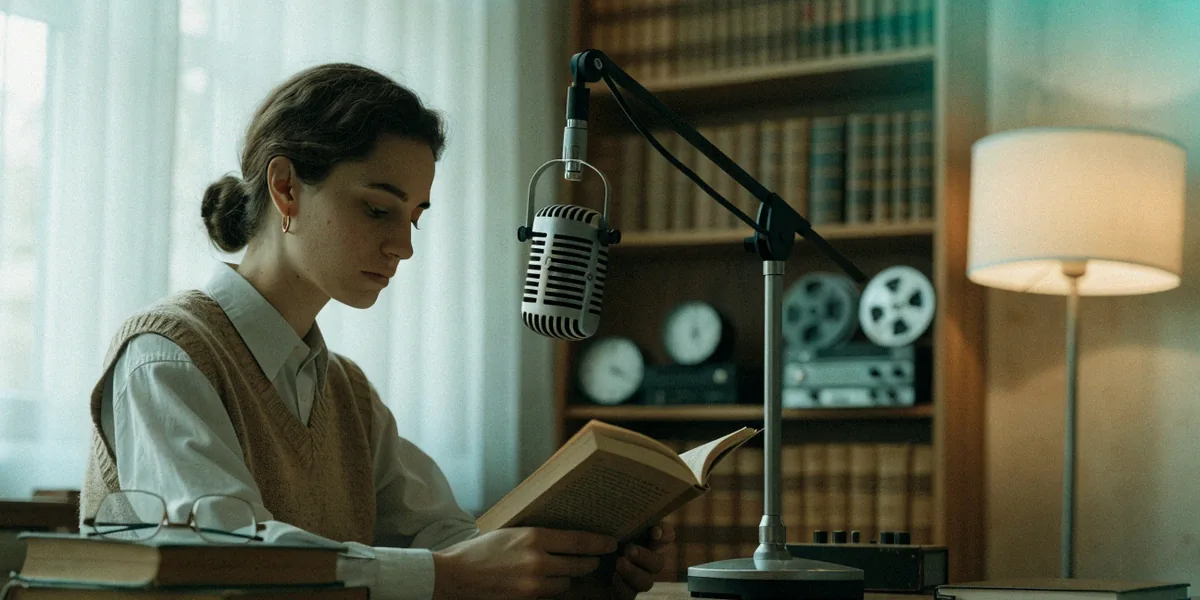
We’ve all sat through a history lesson where dates and statutes blur into one. Audio drama works differently. The University of London has published research on auditory learning and memory retention showing that information delivered through voice, sound and narrative is recalled more effectively than dry text alone. It makes sense: the brain processes sound emotionally as well as intellectually, so a dramatised scene lodges itself somewhere deeper than a bullet point ever could. The BBC has understood this for a century, using its educational broadcasts to turn everything from Shakespeare to the Industrial Revolution into something you could hear, feel and remember.
The Power of Voice and Imagination
Radio drama asks something of the listener that television never does: it asks you to build the pictures yourself. When a voice shakes with fear as it describes a escape across a river, the student’s imagination fills in the darkness, the cold water, the barking dogs. That act of co-creation — the listener completing the scene — is precisely what makes the memory stick. In our experience, pupils who hear a story rather than read it can often recount details weeks later.
Emotional Engagement vs. Textbook Facts
Textbooks tell you that Harriet Tubman guided enslaved people to freedom. Radio drama lets you hear her decide to go back, again and again. That emotional engagement doesn’t replace factual rigour — it anchors it. When we pair a dramatised scene with a source document, students have both an emotional hook and a factual reference point. The two reinforce each other.
Destination Freedom: Richard Durham’s Masterclass
If you want to study how this is done at genius level, you go to Destination Freedom. Written by Richard Durham, the series aired from 1948 to 1950 on WMAQ in Chicago, and it dramatised the lives of African American heroes — Harriet Tubman, Frederick Douglass, Ida B. Wells, Nat Turner — at a time when mainstream American radio rarely told these stories at all. Durham was a Black journalist, activist and poet, and he brought all of that to the script. The series is a cornerstone of Black radio history, and its influence reached far beyond Chicago, shaping how later community broadcasters on both sides of the Atlantic thought about telling history on air.
Durham’s Vision and Writing Style
Durham didn’t write dry biography. He wrote drama — conflict, dialogue, moral choice. His scripts assumed a Black audience that knew its own history and refused to explain it apologetically to anyone else. That confidence is part of why the series still lands today. He also understood pacing: a scene had to earn its place, and every line had to work as sound, not just as text.
Key Episodes That Teach Civil Rights History
Several episodes work beautifully in a classroom setting:
- “The Harriet Tubman Story” — the Underground Railroad as lived experience, not just a map.
- “Frederick Douglass” — literacy, resistance and the power of the spoken word.
- “Ida B. Wells” — investigative journalism and the anti-lynching campaign.
- “Denmark Vesey” — slave rebellion and its brutal consequences.
Each of these episodes gives students a person, a moment and a moral problem to wrestle with, which is exactly what good history teaching requires.
Bringing Black Radio History into UK Classrooms
Teachers in Manchester, Birmingham and London can use clips from Destination Freedom alongside local Black British history, and there’s no shortage of material to pair it with. The Black Cultural Archives in Brixton, London, holds extensive materials on Black British history, from the Windrush generation onwards, and the BBC’s ‘Windrush’ season in 2018 — marking the 70th anniversary of the Empire Windrush’s arrival — produced a wealth of audio and documentary resources that sit naturally alongside American civil rights drama.
Lesson Planning with Audio Archives
A simple structure works well. Play a five-minute clip, pause, and ask students what they heard and how it made them feel. Then introduce a primary source — a letter, a photograph, a newspaper cutting — and ask them to compare. Finally, have them write or record a short scene of their own, dramatising a moment from local Black British history. This moves students from consumers of history to makers of it.
Linking to the National Curriculum
Happily, this approach fits the National Curriculum rather than fighting it. It supports chronological understanding, source analysis and the development of a broader historical perspective. Teachers covering migration, empire or post-war Britain can use radio drama as an entry point, then build outwards to the examinable content. It’s not an add-on; it’s a way in.
The Challenges and How We Overcome Them
We won’t pretend it’s all straightforward. Some of the original Destination Freedom recordings are rough — surface noise, narrow frequency range, occasional dropouts. And the cultural context is American, which can feel distant to a Year 9 class in Birmingham.
Technical and Access Issues
The good news is that remastered versions of many episodes are available through the Library of Congress, which has done excellent preservation work on mid-century American radio. For classroom use, a decent Bluetooth speaker and a short, well-chosen clip will do more than a full episode played start to finish.
Making It Relevant for Today’s Students
To bridge generations, we suggest pairing a Durham scene with contemporary UK grime or spoken word — artists who carry the same storytelling energy in a language students already speak. The through-line is voice, rhythm and truth-telling. When a student hears the connection between a 1948 Chicago broadcast and a 2020s London track, the history stops being ancient.
Beyond the Classroom: Radio Drama as Public History
This isn’t only a schools story. Community stations such as Resonance FM and Reprezent Radio have aired historical radio dramas exploring Black British history, keeping the form alive and putting it in conversation with contemporary audiences. That’s the tradition we’re proud to be part of.
Community Radio Projects in the UK
These stations matter because they’re local. A drama about the Bristol bus boycott or the Mangrove Nine lands differently when it’s made by people from those communities. Radio drama becomes public history — owned by the listeners, not just delivered to them.
Our Team’s Ongoing Mission
At blackradiodays.com, we’re committed to documenting this legacy. We archive episodes, write about the writers and producers behind them, and champion the idea that Black radio history is British history too. Every post we publish is part of that effort.
FAQ
What was Destination Freedom and when did it air?
Destination Freedom was a radio drama series written by Richard Durham that aired from 1948 to 1950 on WMAQ in Chicago, dramatising the lives of African American historical figures.
Where can UK teachers find Black British history resources?
The Black Cultural Archives in Brixton, London, holds extensive materials on Black British history, and the BBC’s ‘Windrush’ season from 2018 offers a strong audio and documentary starting point.
Is radio drama actually effective for learning?
Yes. The University of London has published research on auditory learning and memory retention showing that narrative audio engages both emotion and cognition, improving recall compared with text alone.
How do we handle poor audio quality in older recordings?
Use remastered versions where possible — the Library of Congress has preserved many mid-century broadcasts — and play short, well-chosen clips rather than full episodes.
Which UK stations have aired historical radio drama?
Community stations including Resonance FM and Reprezent Radio have aired historical radio dramas exploring Black British history, continuing the tradition Durham pioneered.
So let’s stop treating radio drama as a nostalgic relic, something to be admired behind glass. It’s a living tool — one that carried the civil rights struggle into British living rooms once, and can carry Black radio history and African American history into UK classrooms today. Whether you’re a teacher in Manchester planning a lesson or a listener in London curious about the past, the wireless still has stories to tell. We’ll keep telling them.